


How BESSHUB works
Data collection and analysis
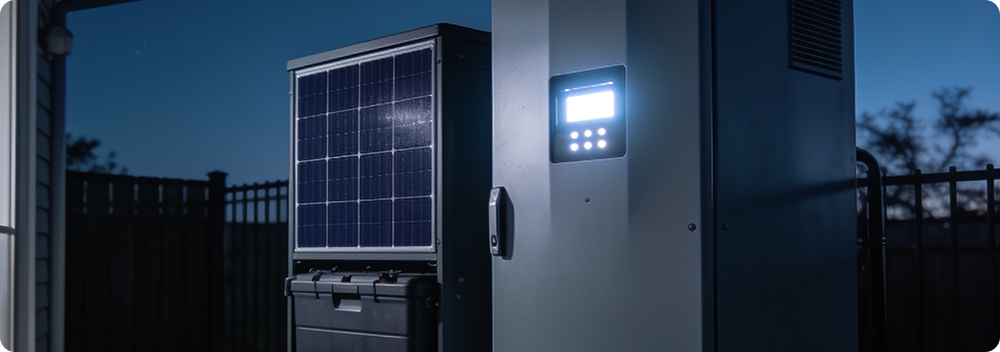
The software provides the ability to continuously monitor and collect data on energy consumption and system parameters using sensors and compatible devices. Analysis of the data allows identification of areas where improvements can be made, as well as evaluation of current processes and systems.
Forecast. Energy Storage. Flexible management.
The innovative aspect of the BESS HUB software lies in the integration of state-of-the-art technologies. Using AI-driven weather and consumption forecasts, the system optimizes energy consumption by intelligently switching between battery and grid power consumption. It also facilitates efficient battery charging from solar panels or the grid, improving overall energy management and sustainability.
Energy storage
In an effort to increase energy efficiency, we are implementing a strategy to store energy in a battery for later recovery. By monitoring electricity prices and solar panel energy production, the BESS HUB selectively charges the battery or deploys the stored energy to take advantage of cost-effective results.
Energy price
BESS HUB regularly retrieves and synchronizes daily energy price data from the "Bulgarian Independent Energy Exchange". This makes it easy to access real-time information on the pricing of solar-generated power, grid costs and battery charging costs.
Weather forecast
Using weather forecasts, we can predict the occurrence of sunny or cloudy conditions in the coming days. This forecasting capability allows us to plan and optimize the use of solar energy resources.
Notification and alarming
The software provides a means of generating messages and alarms that inform dispatchers and users of extraordinary events or irregularities in the system.
The platform provides the ability to remotely control inverters and other equipment, as well as control various parameters.
Everything works as one system - from the physical infrastructure to the financial result
BESSHUB is not software that simply visualizes data.
It is a digital operating system for energy management that connects the physical hardware (PV plant, battery and inverter), forecasts, stock prices, battery, consumption and financial result into one manageable system.
For an energy investment to work effectively, it is not enough to have a solar park, battery and inverters. All these elements need to communicate with each other, be managed in real time, and make decisions based on the market.
That's exactly what BESSHUB does.
Steps to Profit

Hardware produces and stores.

The EMS controller connects.

The software predicts and manages.
BESSHUB turns all this into a financial result.
Energy infrastructure alone does not guarantee profit.
A battery can store energy, but without proper management it has no way of knowing when it is most profitable to use it.
Inverters can work, but if the software cannot manage them due to incompatible protocols, the system remains limited.
Forecasts can exist, but if they are not converted into real commands to the battery, they remain just information.
BESSHUB closes this cycle.
Step 1: The EMS controller connects the software to the real hardware
The physical bridge between BESSHUB and field devices
The first and most important step is physical connectivity.
Software cannot manage batteries and inverters when their protocols are incompatible. That's why BESSHUB does not rely solely on a cloud platform or standard API integrations.
Between the software and the real hardware stands the EMS controller. This is the physical translator that receives the BESSHUB commands and translates them to the various devices in the field.
It connects:
- batteries;
- inverters;
- photovoltaic power plants;
- transformers;
- factory systems;
- network points;
- measuring devices;
- control and protection.
What does the EMS controller decide?

Problem with incompatible protocols
Different inverter and battery manufacturers use different communication protocols. This often makes direct control impossible or severely limited.
The EMS controller translates the BESSHUB commands to each device and turns the different hardware into one manageable system.

The problem of blocked integration
Many energy systems have the physical hardware available, but cannot be managed effectively because the software cannot “talk“ to the inverters and batteries.
The EMS controller removes this obstacle.

The problem with fragmented control
Without an EMS controller, each part of the system operates in its own logic.
With the EMS controller, BESSHUB gets real access to the hardware and can translate forecasts, prices and consumption into specific commands to the battery.
Step 2: BESS SIM creates a digital twin of the object
Before you invest, you need to know the exact math.
BESS SIM is the pre-investment module of BESSHUB.
Its task is to show what the real potential of the object is, what capacity is needed and when the investment can pay off.
This is not a general calculator.
This is a simulation of the specific site.
BESS SIM analyzes:
- historical consumption for one year ago;
- load profile of the site;
- production from existing or planned FPP;
- connected capacity;
- transformer limitations;
- energy import and export opportunities;
- trade conditions;
- historical exchange rates prices;
- possible battery charging and discharging scenarios.
The software then creates a digital twin of the object and simulates how the system would work under real market conditions.
What does BESS SIM show?

Optimal capacity
BESS SIM calculates what size PV plant and what battery capacity are actually needed to avoid overinvesting in unnecessary hardware.
Management strategy
The simulation shows how the battery should be managed. When to charge, when to discharge, when to sell and when to cover its own consumption.

Expected return
BESS SIM shows when the investment can be paid off and which profit streams are applicable to the specific object.
BESS SIM takes the guesswork out of pre-investment and shows the real financial logic of the future system.
Step 3: BESS Forecast forecasts the market, production and consumption
The AI module that turns forecasts into an energy schedule
Once the system is connected, BESSHUB starts managing the daily strategy.
This is what BESS Forecast does.
The module analyzes:
- weather forecasts;
- solar radiation;
- cloudiness;
- temperature;
- historical consumption;
- current consumption;
- production from FES;
- prices on the Bulgarian Independent Energy Exchange;
- expected price peaks;
- arbitrage opportunities.
BESS Forecast does not just show a forecast.
#ffffff;">He turns it into a concrete management schedule.
How does the BESS Forecast work?

Creates a “day ahead“ schedule
The system predicts what will happen the next day. When will there be production, when will there be consumption, when will the price be low and when will it be high.

Manages the battery against the market
BESSHUB can charge the battery when prices are low, zero or negative, and use or sell the energy when prices are highest.

Reduces unbalanced energy charges
Inaccurate forecasts lead to high unbalanced energy charges.
Accurate forecasts and battery management reduce these charges to almost zero.

Unlocks Arbitrage
BESS Forecast Turns Market Volatility into Opportunity.
A Battery Doesn't Just Store Energy.
It Profits from Energy.
Step 4: BESS SCADA manages and protects the physical system
The Industrial Control Layer of BESSHUB
BESS SCADA is the module for monitoring, controlling, alarming and protecting the physical infrastructure.
It gives real control over the system, not only at the graphics level, but at the device level.
BESS SCADA monitors:
- inverters;
- batteries;
- transformers;
- charge and discharge;
- voltage;
- current;
- active power;
- capacity;
- condition of battery cells;
- alarms;
- accidents;
- service history.
How do you manage BESS SCADA?
Monitor the system in real time
SCADA shows how the physical infrastructure is working at any given moment.

Allows control
The system can operate automatically or allow manual intervention when needed.

Generates alarms
In the event of a deviation, accident or risky event, the system sends a notification so that the problem can be seen in time.

Keep history
BESS SCADA stores logs and service history to make maintenance more accurate and predictable.
Protects the battery
SCADA is a key layer in protecting the battery from improper loading, aggressive operation, and hidden degradation.
Step 5: BESS VPP unites small energy capacities into a virtual power plant
When many individual sites start to work as one system
BESS VPP is the virtual power plant module.
It is designed to manage multiple small energy sites in a common virtual group.
This is especially important for:
- small producers;
- RES power plants;
- electricity traders;
- aggregators;
- portfolios of many different assets.
Step 5: BESS VPP unites small energy capacities into a virtual power plant
When many individual sites start to work as one system
BESS VPP is the virtual power plant module.
It is designed to manage multiple small energy sites in a common virtual group.
This is especially important for:
- small producers;
- RES power plants;
- electricity traders;
- aggregators;
- portfolios of many different assets.
Step 6: BESS View translates energy into money
Financial transparency of the system
BESS View is the interface that shows not only what is happening technically, but what the business result is.
It is designed for owners, investors, managers and CFOs who want to see a clear picture:
- how much energy is produced;
- how much energy is consumed;
- how much energy is stored;
- how much energy is imported from the grid;
- how much energy is exported to the grid;
- what is the battery charge status;
- what are the revenues;
- what are the savings;
- what is the arbitrage effect;
- how is the ROI moving.
Ознаната разлика

The regular platform shows kilowatts.

BESS View shows financial result.

This means the owner doesn't just see graphics.

This means the owner doesn't just see graphics.
Step 7: BESS Charge monetizes excess energy
When surplus becomes new revenue
BESS Charge is the module that allows excess energy to be used more intelligently through charging infrastructure and electric vehicles.
There are times when the solar power plant produces more energy than the site can use or store.
There are also times when the stock price is low, zero or negative.
Instead of this energy being lost or sold ineffectively, BESS Charge can turn it into a new revenue stream.
How does BESS Charge work?
The system predicts when there will be a surplus of solar energy.
It can then activate charging logic for electric vehicles, for example through notifications, reservations or incentives to charge at specific times.
This way, the surplus energy finds a useful application.
The facility wins.
Consumers get a more profitable charge.
The system uses energy that would otherwise be wasted.
Three-level battery protection
BESSHUB is not only looking for profit. It protects the life of the asset.
The battery is one of the most expensive elements in the energy system.
Therefore, it should not be managed aggressively just for short-term financial results.
BESSHUB uses a three-level protection logic.

1. BMS protection
The battery's factory software monitors critical temperature and voltage anomalies.

2. BESSHUB software control
SCADA and AI manage the load, microcycles and operation so that the battery is not used destructively.

3. Engineering Monitoring
The system is monitored by real dispatchers who understand not only the graphics, but also the physical infrastructure behind them.
The five profit streams that BESSHUB enables
BESSHUB doesn't just manage a battery. It unlocks the financial potential of the energy system.
1. Less purchased electricity for production
The system stores its own solar energy and uses it when grid electricity is most expensive.
2. Arbitrage
BESSHUB charges the battery at low, zero or negative prices and sells or uses the energy at high prices.
3. Reducing imbalance charges
Accurate forecasts and active battery management reduce imbalance charges to almost zero.
4. Reactive energy compensation
The software uses inverters to compensate for capacitive and inductive reactive energy, which is especially important for factories and industrial users.
5. VPP and Network Services
The pooling of assets into a virtual power plant opens up the possibility of new market models, flexibility and additional revenues.
What happens in the system every day

1. BESSHUB collects data
From PV, battery, consumption, network, exchange and meteorology.

2. BESS Forecast creates a forecast
The system calculates production, consumption and price scenarios.

3. The software chooses a strategy
When to load, when to unload, when to sell, when to store and when to compensate.

4. The EMS controller executes the commands
The commands reach the actual inverters, batteries and devices.

5. SCADA monitors performance
The system monitors, alerts, and protects hardware.

6. BESS View shows the result
The owner sees revenue, savings, ROI and the effect of management.
BESSHUB works as a single operating system.
The EMS controller connects the hardware.
BESS SIM calculates the right investment.
BESS Forecast predicts the best financial moment.
BESS SCADA manages and protects the system.
BESS VPP consolidates assets into a virtual power plant.
BESS View translates energy into money.
BESS Charge monetizes the surplus.
Together, these elements transform energy infrastructure from a collection of separate assets into a managed financial mechanism.